Responsible sourcing was a cost, not a collaboration.
Artisanal and small-scale mining supplies roughly 20% of the world's gold, but the path from a mining site to the market is opaque, fragmented, and often distrusted. Aggregators juggled paper forms and disconnected apps. Downstream buyers couldn't verify what they were buying. Civil society monitors documented abuses without the tools to share evidence at scale.
Existing due diligence tools treated every participant as a suspect and asked miners to hand over their data in exchange for access. The honest producers ended up invisible, and compliance became a heavy cost rather than a collaborative process.
A shared evidence base, with sovereignty by design.
A role-based digital platform where every stakeholder in the gold value chain contributes to a shared, traceable evidence base while retaining control over their own data. Mine operators own their self-assessments. Aggregators consolidate ESG, risk, and shipment data. Monitors upload field observations without losing authorship.
The platform produces audit-ready dossiers aligned to LBMA, RMI and OECD frameworks, and is built on the Datastake Application Framework, so it plugs into tools like KoboToolbox instead of replacing them.
Onboarding
Meets every stakeholder where they are.
From cooperatives to state actors and civil society, the registration flow adapts to the role, asks only what's relevant, and runs on whatever device the user brought to the table.

Stakeholder Network
From form to graph.
Click any node. Mine operators, monitors, refiners, incidents that triggered Annex II reviews, locations across the gold corridors. Every line is a relationship the platform can audit, route a question to, or attach evidence to.
Daily Operations
The evidence, flattened into work.
The dashboard surfaces the same data the graph maps, but in the shape verifiers, miners and monitors actually use day to day: trends, distributions, ratings, faces.

Supplier Assessment
Inputs roll up to a score.
A short walk-through of the supplier review: every input, onboarding evidence, sourcing history, declared sites, is rolled up into a single risk and readiness score the verifier can act on.
Incidents & Testimonials
The human side of compliance.
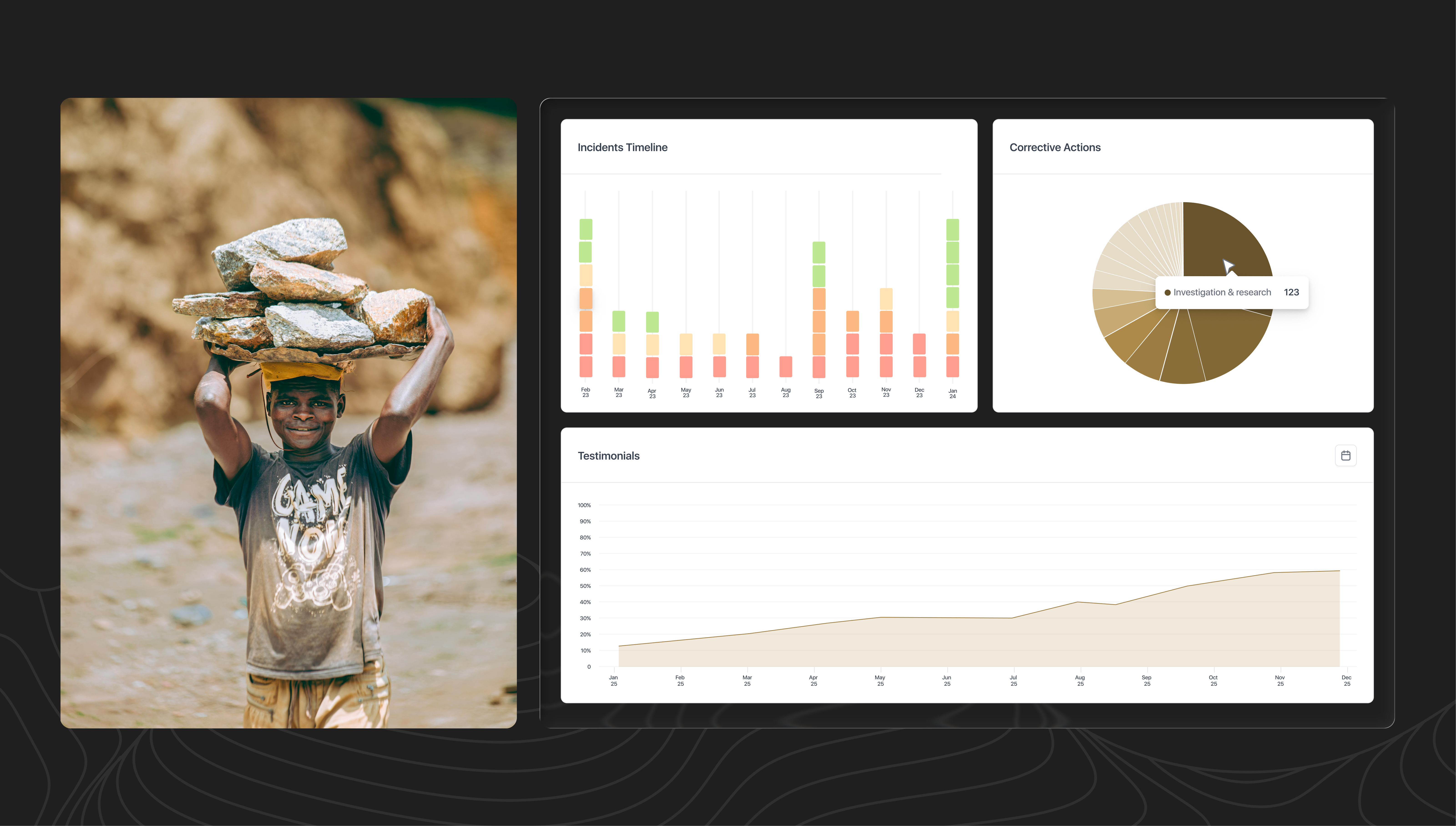
Numbers don't audit themselves. Each incident has a story, each corrective action has a person closing it, each testimonial is someone who chose to be on the record.
Self Assessment
Operators see where they stand.
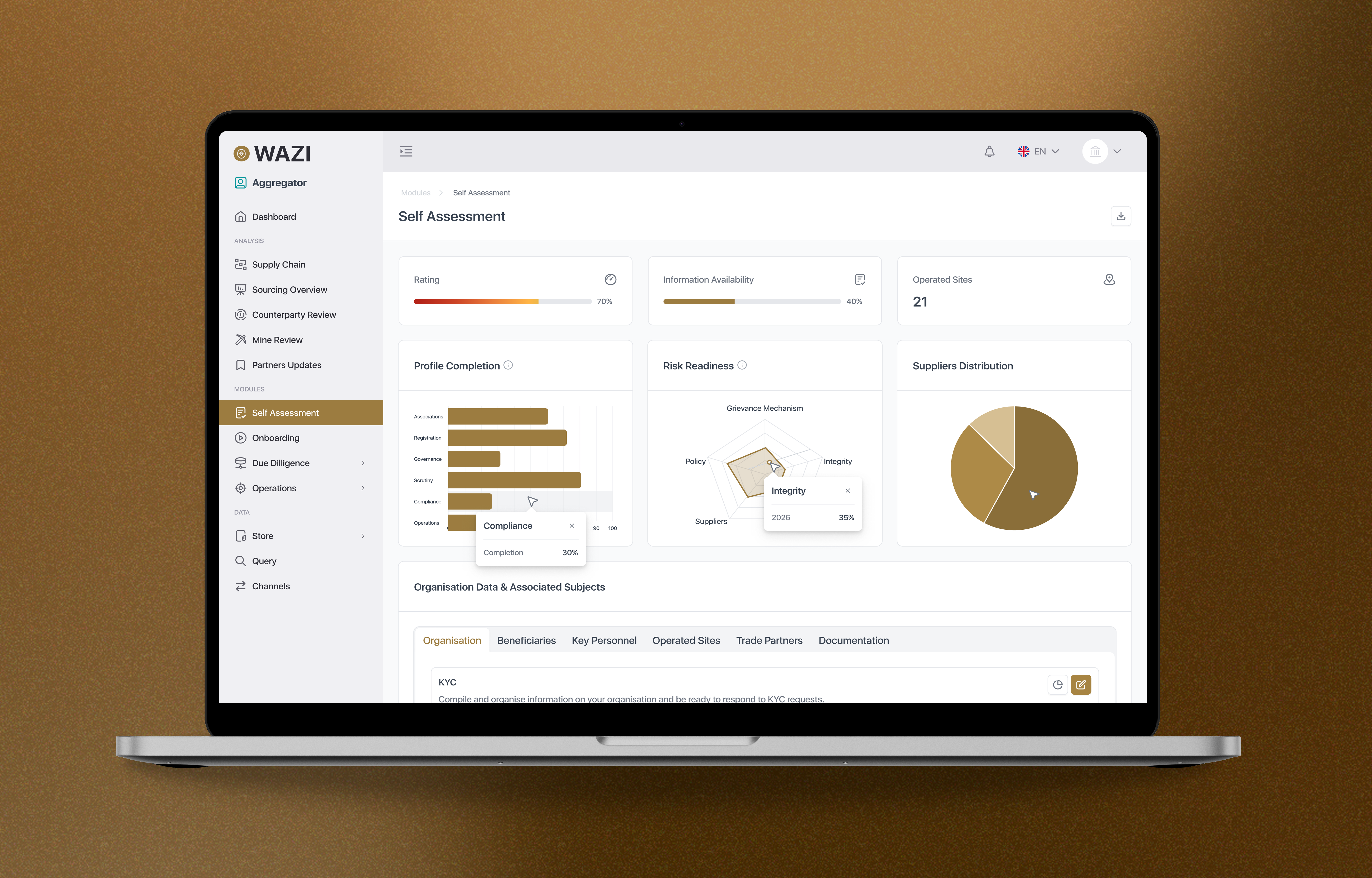
Self Assessment puts the framework in the operator's hands. Ratings, gaps and readiness, readable before any verifier opens a dossier, so improvement is a choice, not a surprise.